
Based in Eastbourne, East Sussex, we build, extend and improve WordPress websites for businesses locally and across the UK. Our WordPress development services connect technical development with wider web design, ecommerce, SEO, AI search visibility and long-term website care, creating platforms that are built to perform now and remain practical to develop in the future.
From Elementor development, custom functionality and third-party integrations to WooCommerce, structured content, technical search foundations and ongoing development, we create WordPress solutions around what your business actually needs.
WordPress can be much more than a system for publishing pages. With the right website architecture and development, it can connect content, services, ecommerce, customer journeys and external business tools within one flexible digital platform.
At KAIA Design, custom WordPress development is considered alongside the wider website experience. How a feature is developed can affect responsive design, usability, search visibility, content management, ecommerce performance and how easily the website can be maintained later.
That is why we do not treat development as an isolated technical task. We look at how the website needs to work for users, how information should be structured for SEO and AI-powered search, how ecommerce or enquiry journeys fit into the platform and how the site can continue to evolve without becoming unnecessarily difficult to manage.
We work with both new WordPress websites and existing WordPress platforms, from focused development work to larger projects requiring new functionality, integrations or structural change.
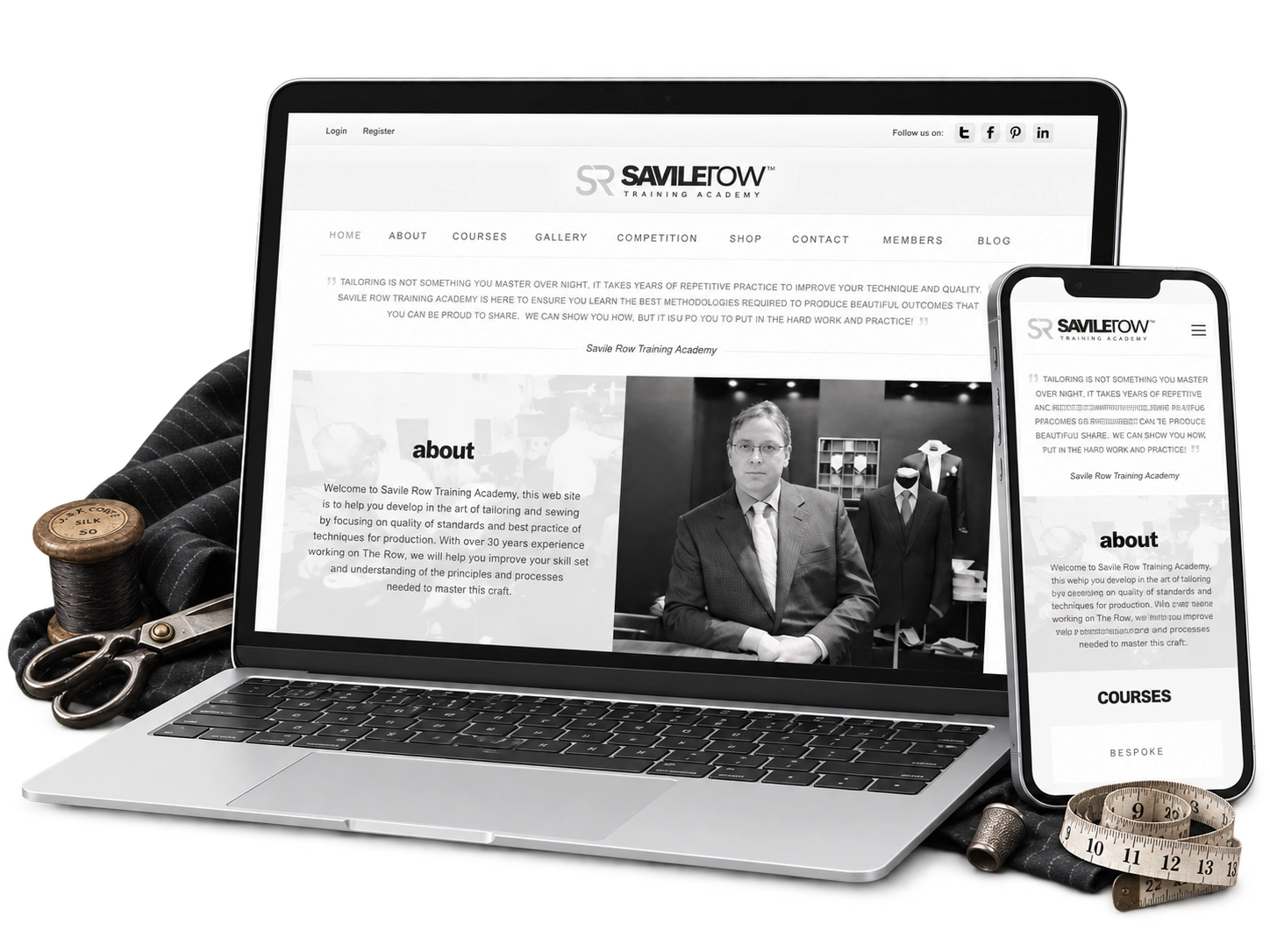
WordPress projects rarely need exactly the same combination of features. We use established WordPress tools where they provide the right solution and introduce bespoke development, structured content and integrations where more flexibility is required.
We develop custom WordPress features where a standard theme, plugin or page builder cannot provide the right result, from tailored front-end behaviour to functionality built around specific business processes.
Services, projects, locations, resources, products and other repeatable information can be organised through custom post types, custom fields and structured content, creating clearer website architecture and stronger foundations for search.
We work with Elementor and Elementor Pro where they are appropriate for the project, creating flexible layouts, reusable templates and structured editing environments without limiting the website to standard page-builder functionality.
WordPress can support advanced forms, conditional logic, quotation workflows and tailored enquiry journeys, helping the website collect the right information and guide users towards an appropriate next step.
We can connect WordPress with compatible third-party services, APIs, booking tools, calculators and external business systems, allowing the website to work as part of a wider digital setup.
For businesses selling products or services online, WordPress can be extended with WooCommerce development, customised product structures, checkout functionality and integrations that connect ecommerce with the wider website.
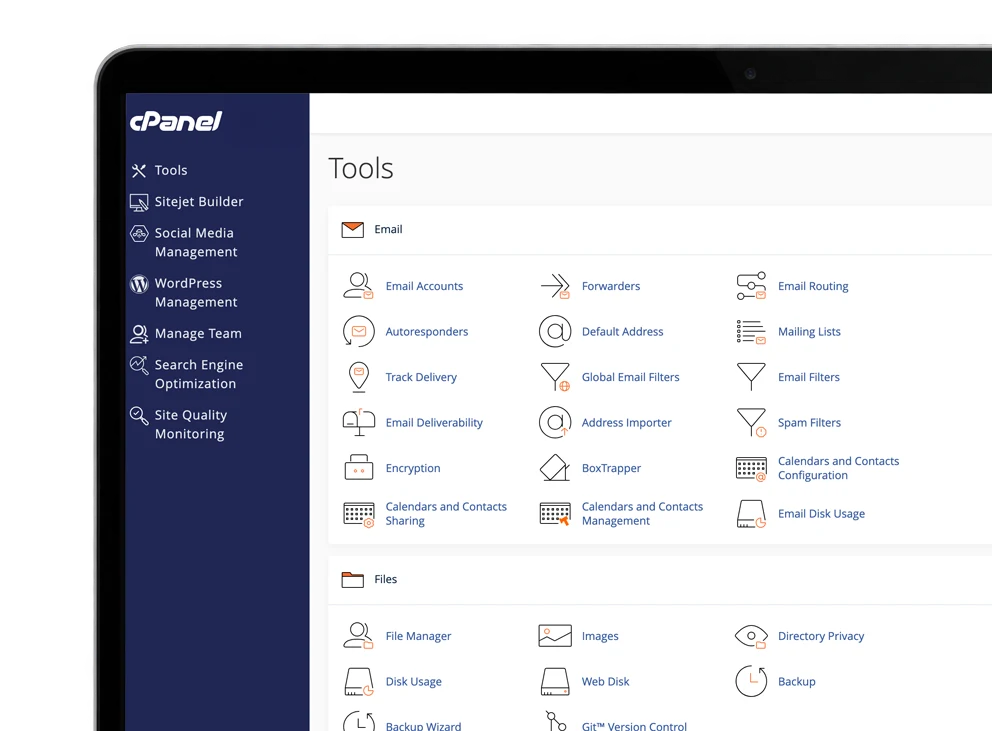
A successful WordPress project starts before the first page or custom feature is built. We can handle the technical setup of WordPress, preparing the hosting environment and platform so development begins on a stable foundation.
Depending on the project, this can include WordPress installation, database configuration, domain and SSL setup, staging environments, theme and plugin configuration and preparation for development.
Where an existing website is involved, we can review its current hosting environment, WordPress version, PHP compatibility, theme, plugins and custom code before significant development begins.
We normally carry out major development and testing within a staging environment before approved changes are deployed to the live website. This helps reduce unnecessary disruption and provides a safer environment for testing new functionality, integrations and updates.
Technical setup also affects later website performance, security, maintenance and recoverability, so hosting and development decisions should be considered as part of the wider project rather than treated as an afterthought.
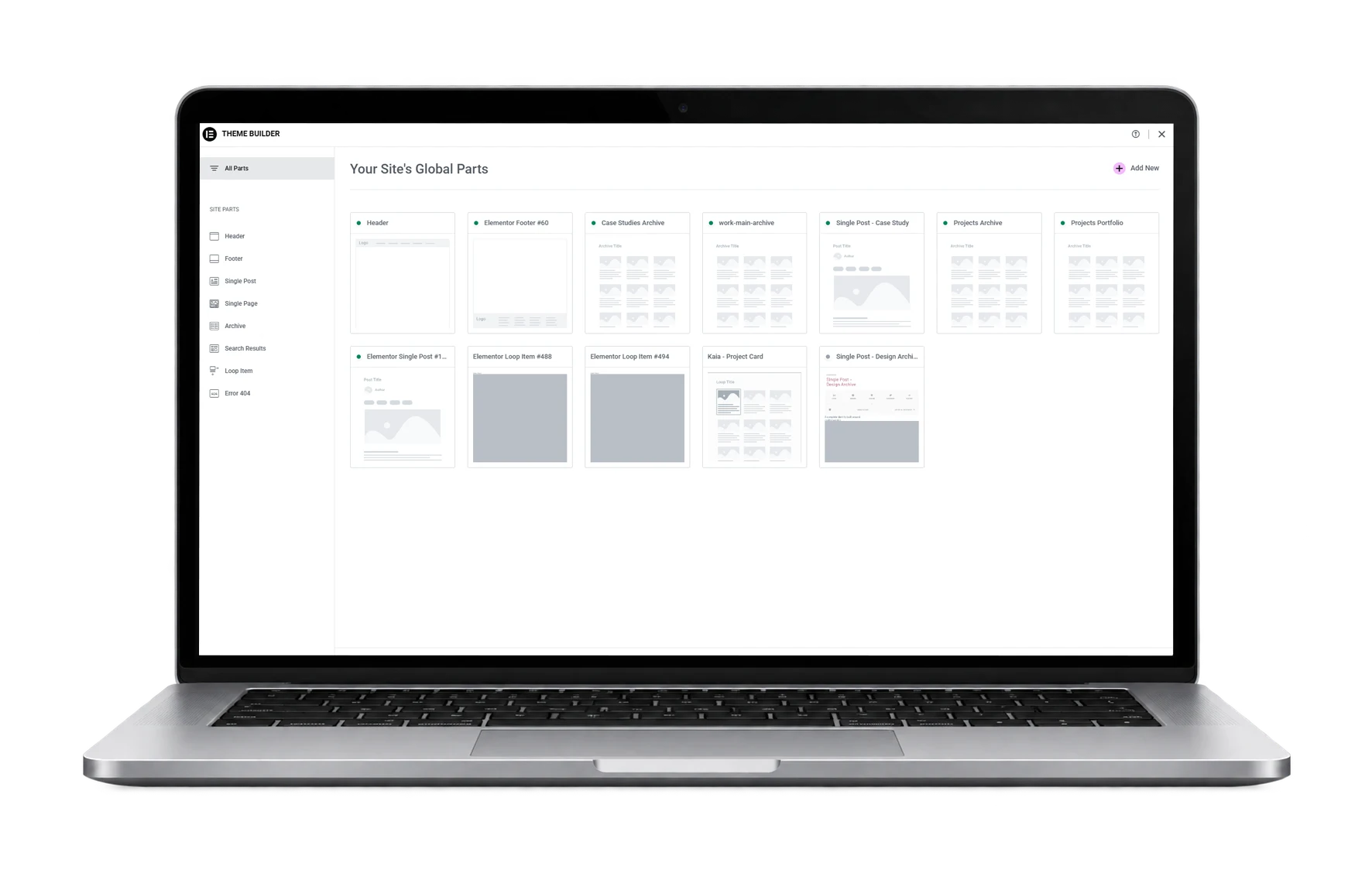
Elementor can provide an efficient way to build and manage WordPress websites when it is used with a considered structure rather than as a substitute for website architecture.
We use Elementor and Elementor Pro where they suit the project, creating reusable templates, global styles, dynamic content and manageable page structures that make everyday editing practical for the client.
Where Elementor alone cannot provide the required functionality, it can be combined with custom fields, structured content, third-party integrations and bespoke development rather than forcing a complex requirement into an unsuitable page-builder solution.
This approach also helps preserve consistency across the wider web design system, while allowing content, ecommerce functionality and search-focused structures to continue developing as the website grows.
Not every existing WordPress website needs to be replaced. If the underlying platform remains suitable, targeted development can often improve functionality, structure, performance and the way the website supports the business.
We work with WordPress websites originally built by other developers or agencies, reviewing the theme, plugins, custom code, content structure, integrations and hosting environment before recommending significant changes.
Development might involve adding new services, restructuring content, creating templates, improving customer journeys, introducing ecommerce functionality, connecting external tools or addressing technical limitations that are preventing further growth.
Where the existing platform is no longer the right foundation, we can also advise whether a broader website redesign, website migration or rebuilding part of the website would provide a better long-term solution.
We review the existing WordPress setup, theme, plugins, content structure and custom functionality to understand how the website has been built and where the main limitations are.
We can improve existing functionality, restructure content, refine templates and address technical issues that make the website harder to manage or develop further.
As your business changes, we can add new features, integrations, content types and functionality without automatically replacing the entire website.
A business website often needs to do more than display information. It may need to collect detailed enquiries, guide customers through a quotation process, support bookings, connect with external systems or become part of a wider ecommerce and customer journey.
We develop WordPress functionality and integrations around those practical requirements, using established tools where they provide the right solution and introducing custom development where a standard setup cannot deliver what the business needs.
The aim is not to add complexity for its own sake. It is to create useful workflows, reliable integrations and intuitive front-end experiences that connect the website with the systems and processes behind the business.
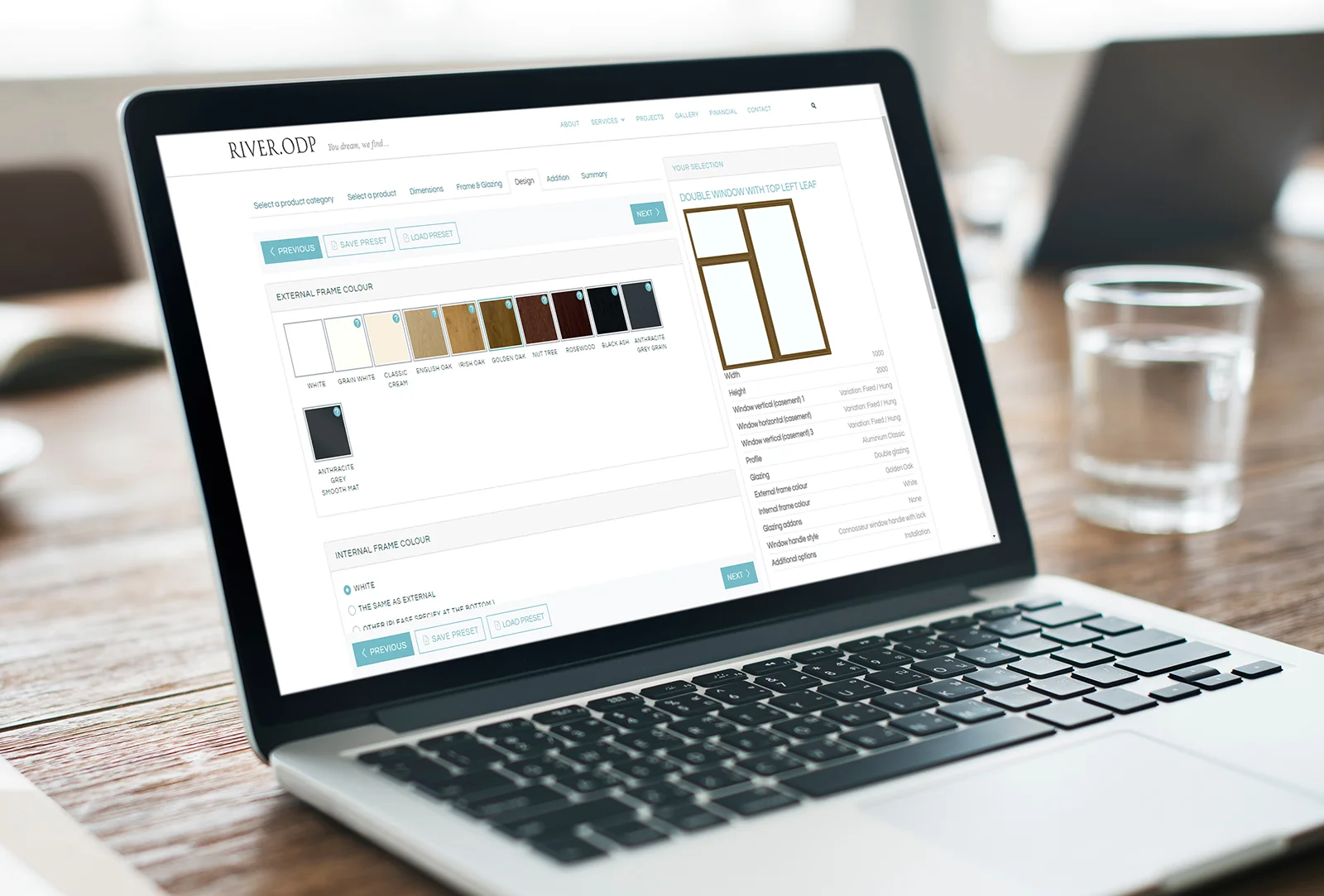
Our ongoing work with River ODP is a practical example of how WordPress can support more specialised business processes through third-party functionality and integrations.
Rather than relying on a conventional ecommerce journey, the website incorporates a specialist window calculator that allows customers to work through product requirements before moving towards a quotation. This creates a more appropriate customer journey for products that cannot always be purchased through a simple standard checkout.
The wider WordPress and WooCommerce website provides the content, product and customer-facing structure, while the external calculator supports the more specialised configuration process. Together they create a connected experience where web design, ecommerce functionality and a third-party business tool work as part of one customer journey.
This type of integration is particularly useful when an existing calculator, booking platform, quotation system or specialist tool already performs an important role and needs to become part of the wider website experience rather than being replaced unnecessarily.
For businesses using WordPress as both a content platform and an ecommerce website, WooCommerce can connect product information, customer journeys and online transactions with the wider website.
Our WooCommerce development work can include product and category structures, tailored functionality, quotation-based journeys, payment and checkout configuration and integrations with compatible third-party systems.
Good ecommerce development also needs to consider what happens beyond the transaction. Product structure, website architecture, internal linking and technical SEO can influence how products and commercial content are discovered through traditional search and increasingly through AI-assisted search experiences.
As an ecommerce website grows, ongoing performance, compatibility, security and website maintenance become increasingly important. That is why we treat ecommerce development, search visibility and long-term website care as connected parts of the platform rather than separate jobs.
A well-developed WordPress website should be easy for people to use, but it should also be easy for search engines and AI systems to access, interpret and connect with the wider information about the business.
Our WordPress development approach considers website architecture, structured content, crawlability, internal linking, performance and schema markup alongside functionality and design.
For service businesses, this can mean clear relationships between services, locations, projects and knowledge content. For an ecommerce website, it can also include product and category structures, supporting content and technical foundations that help individual products become easier to discover.
These relationships contribute to both organic search visibility and AI search visibility because search systems need clear information about what a business offers, where it operates, who is behind it and how its content is connected.
WordPress development is therefore not separate from search strategy. Web design, development, SEO, structured information and AI discoverability work best when they are considered together.
Technical choices made during development can influence how easily a website is crawled, indexed, understood and expanded later. Building with search in mind from the start helps avoid unnecessary technical limitations.
Logical page hierarchy, crawlable content, sensible URL structures and technically sound templates help search engines access and understand the website efficiently.
Custom post types, structured fields and reusable content models make services, projects, locations, products and resources easier to organise, manage and connect.
Meaningful relationships between service pages, locations, case studies, ecommerce content and knowledge resources help users discover relevant information while providing stronger contextual signals.
Consistent information about your business, services, expertise, locations and real projects, supported by structured data where appropriate, can make the organisation easier for search engines and AI systems to interpret.
Every plugin, integration, template and custom feature becomes part of a website that needs to continue working after development is complete.
For that reason, we try to avoid unnecessary technical complexity, duplicated functionality and excessive plugin dependency. Where possible, we choose solutions that remain practical to update, test and maintain as WordPress and the technology around it evolve.
These decisions can influence website performance, security and compatibility, but they can also protect wider business outcomes. A stable website helps preserve search performance, keeps ecommerce journeys working and ensures that structured business information remains available to both users and AI-powered search systems.
For businesses that want continued support after development, our Website Care & Management services can provide ongoing WordPress maintenance, technical support, backups, security checks and performance improvements.
Every WordPress development project is different, but the process should remain clear. We start by understanding what the website needs to achieve, how it connects with the wider business and which technical approach provides the most practical long-term solution.

We define the required functionality, users, content and business processes, including any ecommerce requirements, integrations or existing technical dependencies.

We plan content structures, templates, functionality, integrations and relevant search relationships before unnecessary technical complexity is introduced.

Where required, we prepare WordPress, hosting and a staging environment so significant development and testing can take place away from the live website.

We combine appropriate WordPress tools with Elementor layouts, structured content, custom functionality, WooCommerce features and third-party integrations where required.

We test responsive behaviour, functionality, forms and integrations alongside relevant performance, crawlability and technical SEO foundations before release.

Approved work is deployed to the live website with a clear route for further functionality, website maintenance and ongoing development as requirements change.
A development project does not have to end with a completely new website. We can work on a specific feature, improve an existing WordPress platform or become involved at a later stage when more advanced functionality is required.
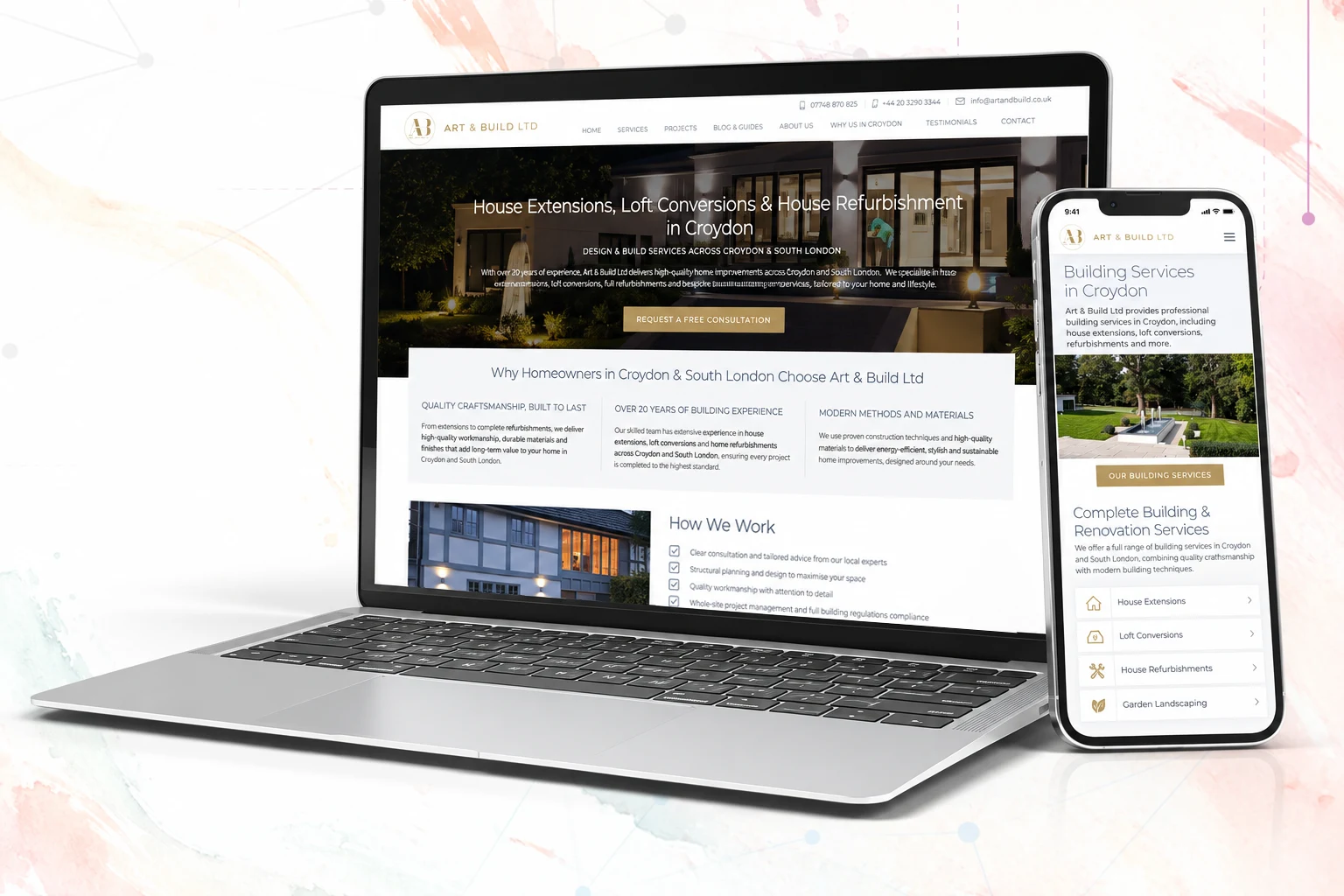
Our work with Art & Build Ltd shows how a WordPress website can continue to evolve as the business, its services and digital strategy develop.
The platform has been expanded with clearer service structures, project content, location-focused pages and a growing Knowledge Centre, creating stronger connections between what the business offers, where it works and the evidence supporting its expertise.
The development work sits alongside wider web design, Local SEO, content structure and AI search visibility, helping the website support both customers and organic discovery rather than functioning as a standalone online brochure.
Instead of treating WordPress as a finished one-off build, the website has become a platform that can continue supporting new services, local search opportunities, structured content and long-term digital growth.
WordPress development rarely exists in isolation. A technical decision can affect the visual experience, ecommerce functionality, search visibility, AI discoverability and how easily the website can be managed years later.
At KAIA Design, we work across web design and development, ecommerce, SEO, AI search and ongoing website care. This allows development decisions to be considered in the context of the wider business rather than as isolated technical tasks.
Visual design, responsive behaviour, content structure and technical development are considered as parts of the same website experience.
WordPress and WooCommerce can support products, quotations, integrations and customer journeys alongside the wider website.
Website architecture, structured content and technical foundations are planned with both traditional search and emerging AI discovery in mind.
Development decisions consider future updates, performance, security and continued website growth rather than stopping at launch.
KAIA Design is based in Eastbourne, East Sussex, working with businesses locally as well as organisations across the UK.
For local businesses, WordPress development often connects naturally with wider web design, Local SEO, search visibility and ongoing website support, particularly when the website needs to communicate multiple services, locations or areas served.
Our local knowledge can support the wider digital structure, while the same development process allows projects elsewhere in the UK to be managed remotely.
Whether the requirement is a new WordPress website, additional functionality or continued development of an existing platform, the technical work remains connected to how the business needs to be found, understood and supported over time.
Depending on what your website needs next, WordPress development may connect with a broader website redesign, ecommerce functionality, search optimisation, AI visibility or continued technical support.
Our services are designed to work together, allowing the website to develop as one connected digital platform rather than becoming a collection of unrelated systems and short-term fixes.
Planning a custom WordPress development project or looking to extend an existing website? These FAQs cover some of the most common questions about functionality, integrations, technical development, SEO foundations and ongoing WordPress support.
WordPress development involves creating, extending or modifying the technical functionality of a WordPress website. This can include structured content, custom templates, integrations, advanced forms, ecommerce functionality and improvements to existing websites.
Yes. Where required, we can prepare the WordPress installation and development environment, including database and platform configuration, staging and the technical setup needed before development begins.
Yes. We work with Elementor and Elementor Pro where they suit the project, including reusable templates, dynamic content and structured page layouts. We can also introduce custom functionality where standard Elementor features are not sufficient.
Yes. We can review a website created by another developer or agency and determine whether it can be safely extended or whether a website redesign, migration or broader rebuild would provide a better long-term solution.
Yes, where suitable integration methods are available. This can include APIs, booking systems, calculators, quotation tools, CRM platforms and other external business systems.
Yes. We work with WooCommerce development and can connect ecommerce functionality with the wider WordPress website, integrations and customer journey.
Yes. Development decisions can affect crawlability, website architecture, internal linking, page performance and structured content, all of which can contribute to the technical foundations of organic search visibility.
WordPress itself does not guarantee AI visibility, but clear content structures, consistent business entities, structured information, schema and strong technical SEO can make information easier for AI-assisted search systems to interpret.
For significant development work, we normally prefer a staging environment, allowing functionality and integrations to be tested before approved changes are deployed to the live website.
Yes. Ongoing maintenance, updates, security, backups and technical support can be provided through our Website Care & Management services.